Everyone in the Pile Has a Good Reel — Here's How to Be the One They Actually Remember
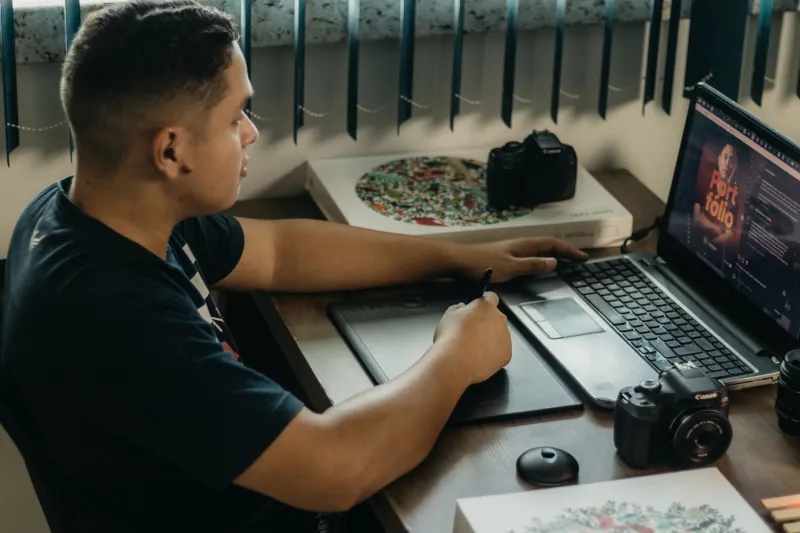
Here's a scenario that plays out constantly in animation studio hiring rooms: the team sits down to review a batch of applications. Twenty reels. Thirty. Maybe more for a desirable opening. And somewhere around reel number twelve, something quietly unsettling happens — they all start to look the same.
Not bad. Good, actually. Clean arcs, solid weight, nice facial work. But indistinguishable. And by the end of the session, the hiring manager can describe maybe three or four of them with any specificity.
If you're building your portfolio right now, that's the problem you're actually trying to solve. Not "how do I make my work technically better" — you've probably already got the fundamentals handled. The real question is: how do I make my work unforgettable?
The Fundamentals Trap
Animation education — whether that's a four-year program, an online bootcamp, or years of self-teaching — is very good at producing animators who can execute. And that's genuinely valuable. The basics matter. You need to be able to show weight, timing, and performance before anything else.
But here's the trap: the industry has gotten very good at producing technically competent animators. Which means technical competence is no longer a differentiator — it's a floor. It's the price of admission to the pile, not a reason to be pulled out of it.
Hiring managers at studios ranging from boutique commercial shops to major streaming productions have said versions of the same thing: "We assume the reel is good if they got this far. What we're trying to figure out is who this person is and whether they'll be someone we actually want to work with."
That's the game your portfolio needs to play.
What Hiring Managers Actually Remember
When you ask people who've reviewed hundreds of reels what sticks with them, the answers are pretty consistent — and they're rarely about technique.
They remember specificity. The reel that had one genuinely unexpected character choice. The piece where you can tell the animator made a real creative decision rather than the safe, correct one. Specificity signals a creative point of view, and a point of view is memorable.
They remember context. When a candidate can explain why they made the choices they made — not just what they did — it changes how the work is perceived. A technically average shot with a compelling creative rationale often lands harder than a technically superior shot presented in a vacuum.
And they remember personality. This sounds vague, but it's real. The way you write about your work, the projects you chose to include, the problems you chose to solve — all of it communicates something about who you are. Hiring managers are also evaluating whether they want to spend eight hours a day with you in a production environment. Your portfolio is part of that first impression.
Building a Portfolio That Tells a Story
This doesn't mean abandoning your reel structure or getting weird for the sake of it. It means being intentional about the narrative your portfolio creates.
Lead With Your Strongest AND Most You
The conventional advice is to lead with your strongest piece. That's still true — but "strongest" shouldn't just mean most technically polished. It should mean the piece that best represents what makes your work distinct. If your most technically clean shot is also your most generic, think hard about whether it's really the right opener.
Include Process — Somewhere
A breakdown video, a case study page on your website, or even a short written description of how you approached a specific shot does something no finished piece alone can do: it shows how you think. Studios hire people, not just outputs. Showing your problem-solving process — including what went wrong and how you fixed it — is genuinely differentiating in a pile of polished reels.
This doesn't have to be elaborate. Even a few paragraphs on your portfolio site explaining the creative challenge behind a piece and how you navigated it is more than most candidates provide.
Curate for the Job, Not for Completeness
One of the most common portfolio mistakes is treating it like a complete archive of your work. It's not — it's a pitch. Every piece in your reel or on your site should be earning its spot. If you're applying for character animation roles, your motion graphics work is probably diluting the message. If you're targeting game cinematics, your 2D work might be noise.
Curate ruthlessly. A focused portfolio of eight strong, relevant pieces hits harder than fifteen pieces that cover all your bases.
Let the Accompanying Materials Work For You
Your cover letter, your website bio, your LinkedIn summary — these aren't formalities. They're part of your portfolio. And they're where you can explicitly tell the story that your reel can only imply.
What draws you to the kind of work you're applying for? What's the creative problem you find most interesting to solve? What do you bring to a collaboration that isn't visible in a reel? These questions have answers, and the animators who can articulate them — clearly, specifically, without sounding like a mission statement — stand out immediately.
The Collaboration Signal
One thing that's become increasingly important as studios think about remote and hybrid teams: evidence that you can work with people, not just independently.
If you've collaborated on a project — a student film, a game jam, a commissioned piece — talk about your role explicitly. Not just "I animated these shots" but "I was responsible for character blocking on the third act while coordinating with the rigging team on a constraint issue." That kind of specificity communicates professional fluency in a way that solo portfolio pieces simply can't.
The Honest Bottom Line
Your reel is probably fine. It might even be great. But "fine" and "great" aren't enough when everyone else in the pile is also fine and great.
The animators who get called in — and called back — are the ones who've figured out how to make their portfolio do two jobs at once: demonstrate the skill and reveal the person. That second job is harder, less taught, and more valuable than almost anything you can learn in a software tutorial.
Start there.