It's Not Just Crunch: The Hidden Forces Draining Animators Dry
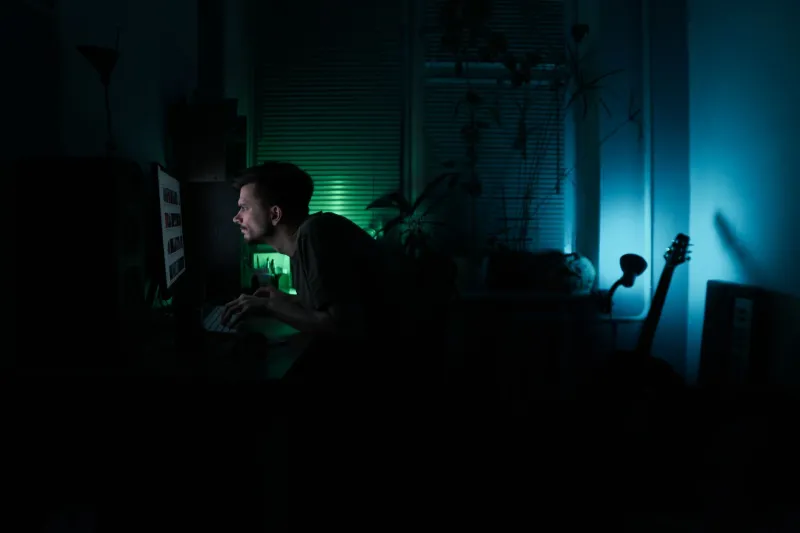
Everyone in the animation industry knows the word "crunch." It gets thrown around at GDC panels, complained about on Twitter threads, and occasionally addressed in studio town halls where leadership promises things will be different next time. But here's the thing — even when crunch isn't happening, a lot of animators are still exhausted. Still dreading Monday mornings. Still quietly wondering if they chose the wrong career.
So what's actually going on?
Burnout in animation is real, it's widespread, and it's being fueled by forces that rarely make it into the conversation. We talked to veteran animators, studio veterans, and mental health professionals to get a fuller picture of why this industry chews people up — even during the "good" stretches.
The Repetition Nobody Warned You About
When you're studying animation, you're constantly creating. New rigs, new characters, new scenes. Then you land your first studio gig and reality hits: you might be animating the same walk cycle variation for weeks. You might spend months on a single background character's idle loop.
"I thought I'd be making art every day," says one character animator who's worked at three major LA studios over the past decade. "And technically I was. But it didn't feel that way. It felt like assembly line work with a stylus."
This gap between expectation and reality is a genuine psychological stressor. Cognitive scientists call it meaning discrepancy — when the work you do doesn't align with the purpose you assigned to it. In animation, where most people entered the field because they loved storytelling and creative expression, getting slotted into repetitive production tasks can quietly erode your sense of identity over time.
This isn't anyone's fault, necessarily. Production pipelines require consistency and volume. But studios that never acknowledge this disconnect — or worse, expect animators to just be grateful for the job — are setting their teams up for slow-burn disillusionment.
Perfectionism Is Baked Into the Culture
Animation is a visual medium where everything is visible. Every frame. Every easing curve. Every subtle weight shift that a casual viewer won't notice but a senior animator absolutely will. That level of scrutiny breeds a culture of perfectionism that can be genuinely toxic to mental health.
Dr. Alicia Moreno, a licensed therapist in Los Angeles who works with creative professionals, puts it plainly: "Perfectionism isn't the same as high standards. High standards are about the work. Perfectionism is about self-worth being tied to output. When those get tangled together, every note in a review feels like a personal attack."
In animation studios, feedback is constant. Daily standups, weekly reviews, director notes, client revisions. For animators who've internalized perfectionism — and the culture often rewards those who have — this feedback loop becomes relentless. You're never done. Something can always be better. And the better you get, the higher the bar rises.
"There's no finish line," one veteran animator told us. "You get good enough that people expect more, and then you're just running faster on the same treadmill."
Imposter Syndrome Hits Different in a Visual Field
Imposter syndrome exists in every industry, but animation has a particular flavor of it that's worth naming. Because the work is visual, comparison is immediate and unavoidable. You can see exactly what your colleagues are producing. You can scroll Instagram and watch reels from animators all over the world. The benchmark is always right in front of you.
"In most jobs, it's harder to directly compare your output to someone else's," says Dr. Moreno. "In animation, you're literally watching someone's skill in motion. That can be inspiring, but it can also be crushing if you're already in a fragile headspace."
This is especially acute for animators who came up through non-traditional paths — online courses, self-teaching, community college programs rather than CalArts or Ringling. The sense that you "snuck in" through a side door never fully goes away for some people, and studio environments that emphasize pedigree only make it worse.
The Psychological Cost of Constant Critique
Here's something that doesn't get discussed enough: having your creative work critiqued repeatedly, professionally, and sometimes bluntly is psychologically demanding in a way that's hard to fully explain to people outside the industry.
Animation isn't like coding, where the output is either functional or it isn't. It's expressive work. It carries intention. And when a director says "this doesn't feel right" or a client asks for a complete tone change three weeks before delivery, there's an emotional residue that builds up over time.
"You learn to detach," says a 15-year industry veteran who now works as a lead animator at a mid-size studio in Atlanta. "But detaching has a cost too. You start caring less. About the work, about the job, about being there at all. That's the burnout nobody talks about — not the exhaustion kind, the numb kind."
That numbness is often the last stage before someone leaves the industry entirely. And it doesn't announce itself loudly. It creeps in.
Recognizing the Signs Before They Spiral
So how do you catch this before it catches you? Mental health professionals and experienced animators point to a few early warning signs that are easy to rationalize away:
- You're technically showing up, but mentally checked out. Your work is fine. You're hitting deadlines. But you haven't felt genuinely engaged in months.
- Feedback that used to roll off now stings. Or the opposite — you've stopped caring about feedback at all.
- You've stopped consuming animation outside of work. No more watching films for fun, no more following artists you admire. The thing you loved has become just a job.
- Sunday dread is a weekly ritual. Not just the normal end-of-weekend feeling — a genuine low-grade dread about the week ahead.
If any of these feel familiar, that's worth taking seriously. Not as a sign you need to quit, but as a signal that something needs to change.
What Actually Helps
The fixes aren't always dramatic. Sometimes they're structural — talking to a manager about task variety, advocating for rotation across projects, or taking actual PTO instead of hoarding it. Sometimes they're personal — therapy, creative projects outside of work, reconnecting with why you got into this field in the first place.
Dr. Moreno recommends what she calls "creative sovereignty" — maintaining at least one creative outlet that has nothing to do with your job and no external feedback loop attached to it. "It doesn't have to be animation. Paint. Write. Garden. The point is to remind yourself that you're a creative person, not just a creative employee."
Studios have a role here too. The ones that are genuinely addressing burnout — not just crunch, but the deeper stuff — are building in structured check-ins, normalizing mental health conversations, and actually listening when animators say they're struggling.
But until that's the industry standard rather than the exception, the responsibility largely falls on individual animators to know their own warning signs and act on them before the spiral gets too steep.
You got into this industry because something about it lit you up. That's worth protecting — even if the studio culture doesn't always make it easy.