Scattered Studios, Unified Vision: How Remote Animation Teams Are Making It Work
Let's be honest — the image of animation as a craft that requires a bullpen full of people huddled around monitors, debating frame timing and color palettes in real time, is getting harder to defend. Plenty of studios have been quietly dismantling that assumption for years now, and the results are surprisingly compelling.
Remote animation work isn't a consolation prize anymore. For a growing number of studios and artists, it's the whole point.
But making it work — really work, not just "we have a Slack and a prayer" work — takes more intentionality than most people expect. Here's what that actually looks like in practice.
The Communication Stack That Doesn't Make You Want to Quit
One of the first things distributed animation teams figure out (usually the hard way) is that the tools matter a lot less than the norms around using them. You can have every app in the known universe and still drown in notification chaos.
The studios that are doing this well tend to operate with a pretty lean stack, but with clear rules about what goes where. A common setup: a project management tool like Shotgrid or Ftrack for production-specific tracking, a dedicated async video feedback tool like Frame.io or Vimeo Review for actual creative notes, and a real-time messaging platform like Slack or Discord for quick questions and team culture stuff.
The key distinction? Separating production communication from social communication. When everything lives in the same channel, nothing feels urgent and everything feels noisy. Studios that split these out report that both the work and the culture actually improve — because neither one is constantly competing for attention.
Async Feedback That Doesn't Flatten the Creative Process
Here's where a lot of remote animation teams stumble: feedback. In-person critique has an energy to it. You can read the room, ask follow-up questions in real time, and course-correct on the fly. Strip that away and you risk getting notes that are either too vague to act on or so specific they leave no room for the artist's interpretation.
The fix isn't just better tools — it's better feedback culture.
Some studios have started requiring that async video notes (the kind you'd leave in Frame.io, for instance) include a short screen recording where the reviewer talks through their thinking, not just marks up the frame. This preserves the conversational quality of in-person feedback without requiring everyone to be online at the same time. It's a small shift, but animators who've worked in studios using this method say it changes everything about how notes land.
Another approach gaining traction: the "two-pass" note system. First pass is purely observational — what the reviewer is seeing and feeling, without prescriptive fixes. Second pass, if needed, gets into specifics. This keeps the feedback from becoming a list of demands and opens space for the artist to problem-solve.
Virtual Crits That Actually Inspire People
Group critique sessions are one of the hardest things to replicate remotely, and a lot of studios have basically given up on them — which is a shame, because a good crit can be one of the most energizing parts of working in animation.
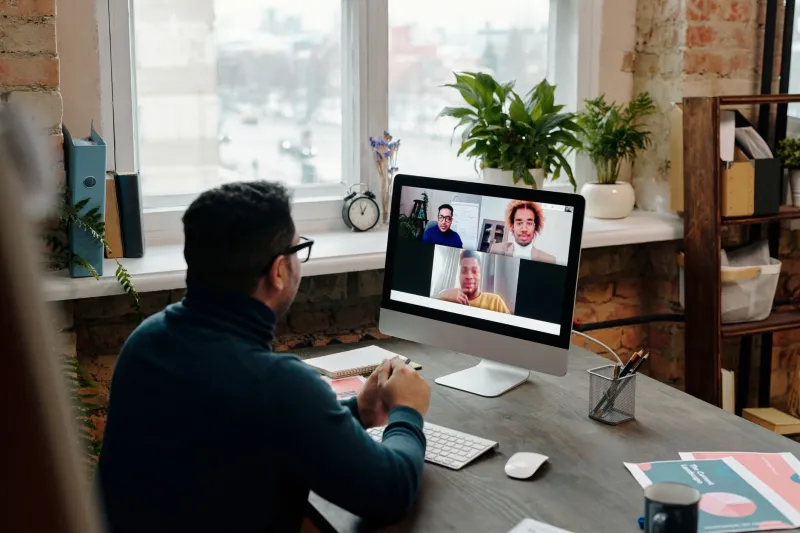
The studios getting this right are treating virtual crits less like meetings and more like events. That means shorter, more focused sessions (45 minutes max), a rotating facilitator role so it doesn't always feel like a performance review, and a deliberate warm-up — some teams do a quick "appreciation round" where everyone says one thing they genuinely liked about someone else's recent work before diving into critique.
Some studios are also experimenting with async pre-crit submissions, where artists share a short Loom video walking through their work and their own questions before the live session. By the time everyone gets together, the basic context is already established and the conversation can go deeper faster.
It sounds like a lot of structure for something that's supposed to feel creative. But the structure is what protects the creativity — it keeps the session from getting hijacked by logistics or dominated by the loudest voice in the (virtual) room.
The Geography Shift: Where Animators Are Actually Landing
Maybe the most tangible consequence of remote animation work going mainstream is the geographic redistribution of talent. For decades, if you wanted a serious animation career, you were probably looking at Los Angeles, New York, or maybe a handful of other production hubs. That calculus has changed pretty dramatically.
Animators are now building legitimate careers from Austin, Asheville, Boise, and plenty of places that would have been career dead-ends ten years ago. And studios are noticing — not just because it expands their talent pool, but because it often means lower overhead costs and, in some cases, more stable hiring (people who aren't constantly being poached by the studio down the street).
The tradeoff is real, though. Remote-first studios have to work harder to build the kind of ambient culture that happens naturally when people share physical space. The spontaneous hallway conversation, the lunch run where someone casually pitches a wild idea — those things don't just happen on their own over video call. The studios that are thriving in this model are the ones that engineer those moments intentionally: virtual coffee chats, optional hangout channels, annual in-person retreats that function more like creative summits than corporate team-building exercises.
Hybrid: The Model Most Studios Are Actually Settling Into
Full remote is still the exception rather than the rule, even as it grows. What more studios seem to be landing on is a hybrid model — some core in-person time (often around production milestones or creative kickoffs) with the rest of the work happening wherever people are.
This approach tries to capture the best of both worlds, and when it's executed thoughtfully, it often does. The challenge is avoiding the worst of both: the hybrid model can easily become a situation where remote workers feel like second-class citizens and in-office workers resent the flexibility they don't have.
The studios navigating this well tend to have one thing in common: they've made explicit decisions about what requires in-person presence and what doesn't, rather than defaulting to "everyone should be in the office when possible." That clarity makes a huge difference in how equitable the whole thing feels.
What This Means If You're Job Hunting Right Now
If you're looking for animation work and remote flexibility matters to you — whether that's full remote or a hybrid setup — the good news is that you have more options than ever. The less good news is that not all remote animation jobs are created equal.
When you're evaluating opportunities, ask specific questions: How does the team handle feedback and critique? What does a typical production week look like in terms of meetings vs. async work? How often does the team meet in person, if at all? What tools are you expected to be proficient in?
The answers will tell you a lot about whether the studio has actually built a distributed culture or is just doing remote work by default and hoping for the best. There's a big difference — and you'll feel it on day one either way.
The remote animation studio is no longer an experiment. It's a legitimate career context. The artists and studios figuring out how to make it great — not just functional — are the ones setting the standard for what animation work looks like next.